
Why do I feel so resentful toward my husband?
Jun 07, 2026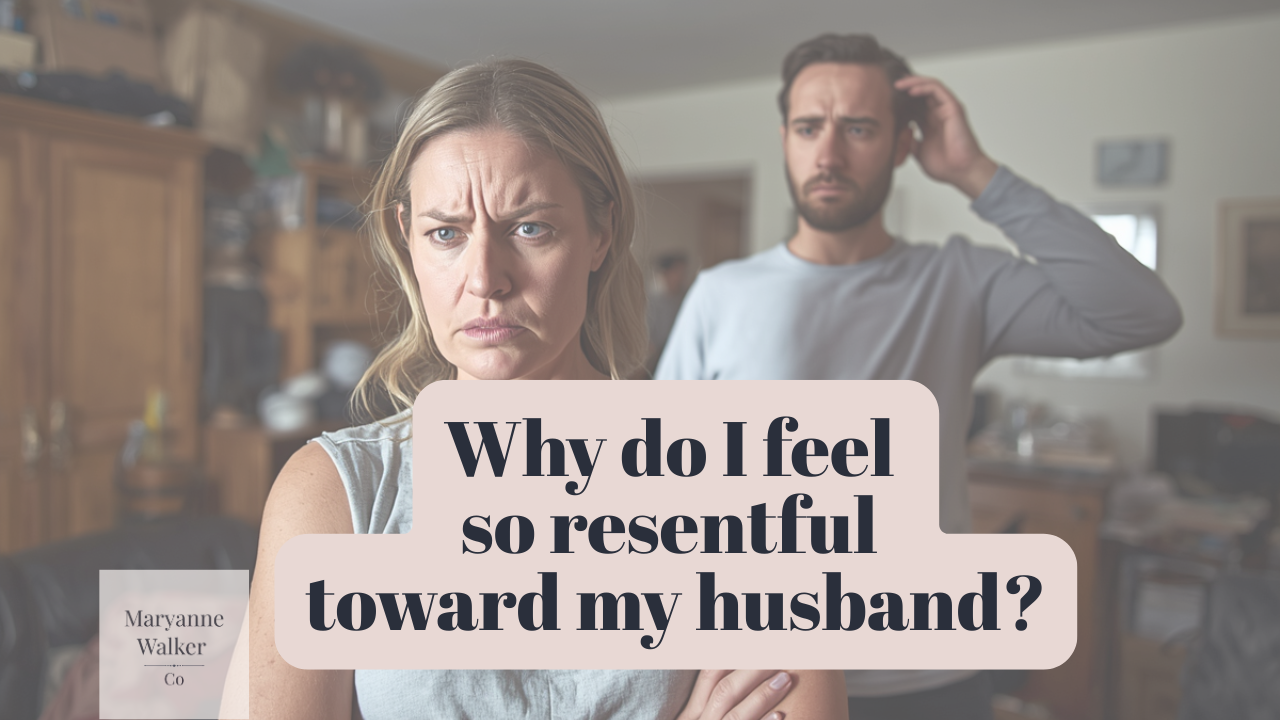
Katie Allen didn’t fume. She was slow boiling, and she couldn’t figure out why.
Nothing had happened, exactly. But lately, the sight of her husband made her feel a certain way, and it wasn’t a good feeling.
Like Katie, most women don’t feel resentful because one huge thing happened. What often builds resentment is the same small thing happening over and over.
You notice the dishwasher needs to be unloaded. You notice the school form on the counter needs to be filled out. You notice the birthday gift for the party on Saturday still needs to be wrapped. Dental appointments need to be made. A text to the family has to go out to plan the holiday gathering you are planning again, mostly by yourself.
You notice everything. You notice the trash is full, the fridge is low, the laundry is sitting there, the school email needs an answer, and someone still has not followed up on the thing they said they would handle. Then you handle it. Not because it was yours, but because if you do not handle it, it may not get addressed.
This is often where resentment starts.
When you become the default person in your marriage
In many marriages, one person, often the wife, slowly becomes the default person. The default person is the one who notices what is unfinished, uncertain, emotionally tense, or at risk of falling apart. She remembers the details. She follows up. She adjusts. She anticipates what might go wrong. She keeps the family, home, calendar, relationships, and emotional tone moving.
At first, it may not look like a problem. You may be good at juggling everything. You may be faster. You may know where things are. You may already be thinking three steps ahead. You may also tell yourself, “It is easier if I just do it.” And sometimes, in the moment, it is easier.
But over time, that pattern can turn into a relationship norm. You notice, remind, manage, and step in. Your husband gets used to you stepping in. Then you feel angry that he is used to it. That anger may make sense.
Taking care of everything teaches your partner what to expect
This part can be hard to look at because it can sound like blame. That is not the point. The point is that relationships develop patterns. When you keep taking care of everything, the other people in the family start to organize around that.
If you always remember the appointment, it becomes normal for you to remember the appointment. If you always notice the empty fridge, it becomes normal for you to notice the empty fridge. If you always smooth over the tense conversation, it becomes normal for you to smooth over the tense conversation. If you always step in when your husband forgets, delays, avoids, or does not notice, it becomes normal for you to step in.
You may be frustrated because you want him to just see all the things you see. You may want him to notice without being told. You may want him to take care of things without needing instructions. You may want him to take ownership, not just complete a task after you assign it. That is a reasonable desire. But if the pattern has been, “I will catch it, fix it, remind you, or do it myself,” then the marriage may have learned to rely on you as the default person.
That does not mean it is your fault. It means the pattern has to be seen before it can change.
Resentment often comes from ownership that was never agreed to
A lot of women are not resentful because they had to do one task. They are resentful because they became responsible for noticing, deciding, planning, reminding, following up, and absorbing the consequences.
That is more than a chore list. It is ownership. There is a difference between doing the dishes and being the person who notices the kitchen is becoming a problem. There is a difference between making an appointment and being the person who tracks every appointment before anyone else thinks about it. There is a difference between helping with a family event and being the person who holds the entire event in her head.
The resentment often shows up because you are not only doing more. You are owning more. And some of what you are owning may have never actually been yours.
Why it is hard to stop
If you have been the default person for a long time, stopping may feel irresponsible. You may think, “If I don’t remind him, he’ll forget.” You may think, “If I don’t handle it, it’ll become a bigger problem.” You may think, “If I wait, I’ll be the one dealing with the fallout.” You may think, “If I say nothing, nothing will happen.”
So you step in again. Not always because you want control. Sometimes because waiting feels worse than doing it yourself. This is where the pattern can become confusing. From the outside, it may look like you are choosing to handle everything. Inside, it may feel like you can’t relax unless you know everything is covered.
That is why the first step in changing the pattern is not a dramatic conversation or a full life overhaul. The first step is noticing the times when you are about to take ownership again.
The question is not only, “Why doesn’t he help?”
That question may matter, but it is not the only question. You may also need to ask, “What have I been treating as my responsibility?” “What do I automatically notice before anyone asks?” “What do I step in and handle because I assume it will not happen otherwise?” “What has this relationship learned to expect from me?” “What would need to be handed back, not just complained about?”
Those questions are not meant to excuse your husband. They are meant to help you see the pattern clearly enough to change your part of it.
Because if you only focus on how angry you are, you may keep repeating the same loop. You get resentful. You bring it up. He says he’ll help more. You still notice everything. You still remind him about things. You still manage everything. You still feel like the person in charge of whether things happen. Then the resentment comes back.
A small place to begin
The next time you feel that familiar anger rise, pause before you move into fixing, reminding, or doing. Ask yourself, “What did I just notice?” “Am I treating this as mine?” “Did I actually agree to own this?” “What would happen if I did not step in immediately?” “What would I need to say instead of silently taking it over?”
This does not mean you stop caring. It means you stop automatically turning every noticed problem into your responsibility.
See the pattern. Sort what is yours. Choose what happens next.
Start with the checklist
If this sounds familiar, start with The Default Person Checklist. It will help you see where you may have become the default person in your marriage, your home, your family, or your relationships.
You may recognize yourself quickly because you have been treating too many things as yours before deciding if they actually are.
Start with The Default Person Checklist.
Get your free Default Checklist
Sign up, check your mail, and then see if you're the default person in your life.
Don't worry, your information will never be shared.
We hate SPAM. We will never sell your information, for any reason.